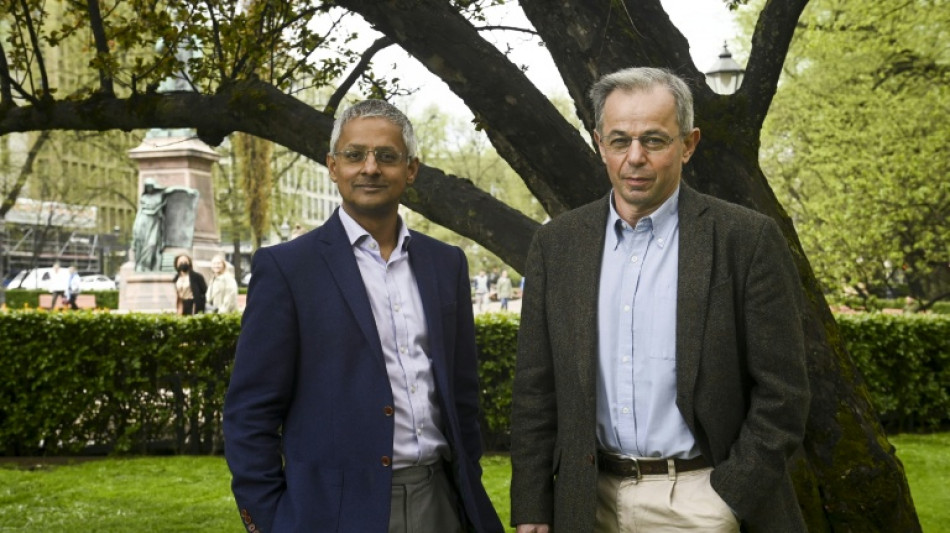
British scientists among winners of top Spanish award / Photo: Emmi Korhonen - Lehtikuva/AFP
British chemists David Klenerman and Shankar Balasubramanian joined French biophysicist Pascal Mayer in winning Spain's top science award on Wednesday for DNA sequencing research that helped combat coronavirus.
The jury of the Princess of Asturias Awards for scientific and technical research recognised the trio for "driving clinical diagnosis and research in biology, biomedicine, forensic medicine and ecology".
"The sequencing of a complete human genome once required months and millions of euros. Now it can be done in a day and in a way that is thousands of times more cost-effective," the official announcement said.
Thanks to their work, the SARS-CoV2 virus that caused the Covid-19 pandemic was able to be sequenced rapidly, allowing the quicker development of vaccines.
Klenerman and Indian-born Balasubramanian created biotechnology company Solexa, now named Illumina, which developed "a commercial method for genome sequencing that is rapid, cheap and efficient", the foundation said in a statement.
They built on the work of Mayer, who studied "the surface amplification of DNA", a laboratory technique that makes it possible to copy DNA on solid surfaces and facilitate its massive sequencing.
US scientist Mary-Claire King took home last year's prize in this category for her application of genetics to the prevention of cancer, contributing to "saving millions of lives".
Founded in 1981, the Princess of Asturias Awards are the most prestigious in the Spanish-speaking world and are named after the title of the heir to the Spanish throne, Princess Leonor.
They come with 50,000 euros ($58,000) in prize money and a sculpture created by the acclaimed late Catalan artist Joan Miro.
King Felipe VI and Queen Letizia are due to award the prizes at a ceremony in October in the northern city of Oviedo, capital of the Asturias region.
O.Moore--CT