Meloni Distances Herself from Trump Following US Midterm Defeat
Italian Prime Minister Giorgia Meloni is accelerating a strategic distancing from former U.S. President Donald Trump following the Republican Party's defeat in the recent midterm elections. This move signals a significant cooling of ties that had previously defined Rome-Washington relations, as Meloni seeks to protect her domestic political standing amid years of public friction and policy disagreements.
Italian Prime Minister Giorgia Meloni is accelerating a strategic distancing from former U.S. President Donald Trump following the Republican Party's defeat in the recent midterm elections. This political recalibration marks a definitive end to the period of close alignment that characterized early interactions between Rome and Washington, as Meloni seeks to insulate her government from the fallout of years of public friction and policy disagreements.
The Italian center-right coalition has maintained a prudent silence regarding the election outcomes, awaiting final results before issuing any formal commentary. This restraint stands in stark contrast to previous years, when Trump frequently issued affectionate tweets and public declarations of support for Meloni’s government. The current caution reflects a broader shift within the political landscape; even Matteo Salvini, the deputy prime minister who was previously the most vocal advocate for Trump’s return to power, has adopted an unusual institutional aplomb, offering only generic good wishes to American voters.
The deterioration of relations between the two leaders has been gradual but persistent. Initially, following Trump’s election victory in November 2024, Meloni emphasized a "strategic bond" that required consolidation. Her administration viewed this relationship as a vital bridge between the United States and Europe. In January 2025, Meloni traveled to Trump’s Mar-a-Lago residence to secure U.S. approval for negotiations regarding the release of Italian journalist Cecilia Sala, who was detained in Iran. This diplomatic success was highlighted by Meloni’s unique position as the only European head of government present at Trump’s inauguration on January 20, 2025.
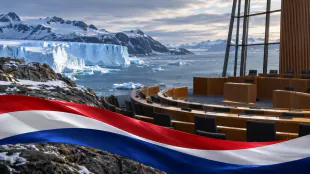
However, cracks in the alliance began to emerge shortly thereafter. In April 2025, Trump imposed initial tariffs on European Union countries. Meloni attempted to mediate between Brussels and the White House but achieved no success. The relationship remained cordial on the surface until January 2026, when Trump initiated pressure to annex Greenland. When eight nations, including Italy, prepared military contingents for the island under Danish control, Meloni became the first European leader to publicly criticize the U.S. president’s actions.
Tensions escalated further in March 2026 during a U.S. military operation against Iran, conducted in coordination with Israel. No European nations were warned of the attack, leaving Italian Defense Minister Guido Crosetto stranded in Dubai. Meloni adopted a cautious stance, stating she neither fully agreed nor condemned the action. The breaking point arrived when the United States requested access to Italy’s Sigonella naval base for aircraft heading to the Middle East. Rome refused the request, marking the definitive rupture of the earlier rapport.
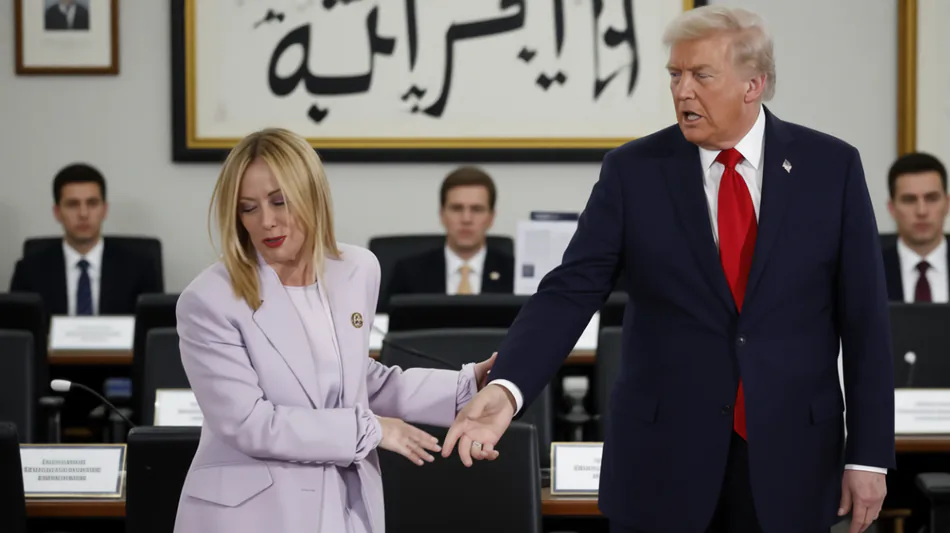
Following this refusal, Trump launched a series of public attacks against Meloni. In April 2026, after Trump criticized Pope Leo for his peace efforts, Meloni initially remained silent before eventually labeling the remarks "unacceptable." Trump responded by telling the Corriere della Sera that he was "shocked" by Meloni, claiming he had believed her to be courageous but found her lacking. Although brief signals of détente appeared at the G7 summit in June, with images of the two shaking hands, the hostility resumed almost immediately.
Trump later claimed in an interview with La7 that Meloni had "begged" him for a photograph and that he agreed only out of pity. Meloni issued a video rebuttal denying this account. Trump persisted on his Truth Social platform, posting an image of Meloni with the caption "restraining order needed." The dispute prompted a solidarity call from the Quirinale (the Italian Presidency) and the cancellation of Deputy Prime Minister Antonio Tajani’s planned trip to the United States.
Despite the public hostility, Meloni has recently attempted to frame her past closeness to Trump as a necessary defense of national interest. In a book by journalist Bruno Vespa, she stated, "I do not regret being very close to President Trump," arguing that such proximity was essential for protecting Italy’s interests. However, this sentiment appears to belong to the past. Meloni has shifted her rhetoric from emphasizing her role as a privileged ally to asserting that every prime minister must maintain good relations with the U.S., regardless of who occupies the White House.
The recent midterm results provide a political opening for this new distance. With Trump’s influence waning in Washington, Meloni faces fewer pressures to justify her government’s independent decisions, such as excluding Italy from recent high-level meetings on Ukraine or ignoring Trump’s derogatory comments about Italy’s migration policies. The Italian right now views the election outcome with a sense of relief, recognizing that associating their image with Trump has become a political liability as domestic elections approach.
While practical policy changes may be limited in the short term, the symbolic break is complete. Meloni’s government will continue to navigate U.S. decisions, such as the recent gas deal between Trump and Russia, with increased independence. In October, she described that deal as "very risky," signaling a clear divergence from American foreign policy priorities. The era of the "privileged interlocutor" has ended, replaced by a more cautious, transactional approach to transatlantic relations.
G.Walker--CT