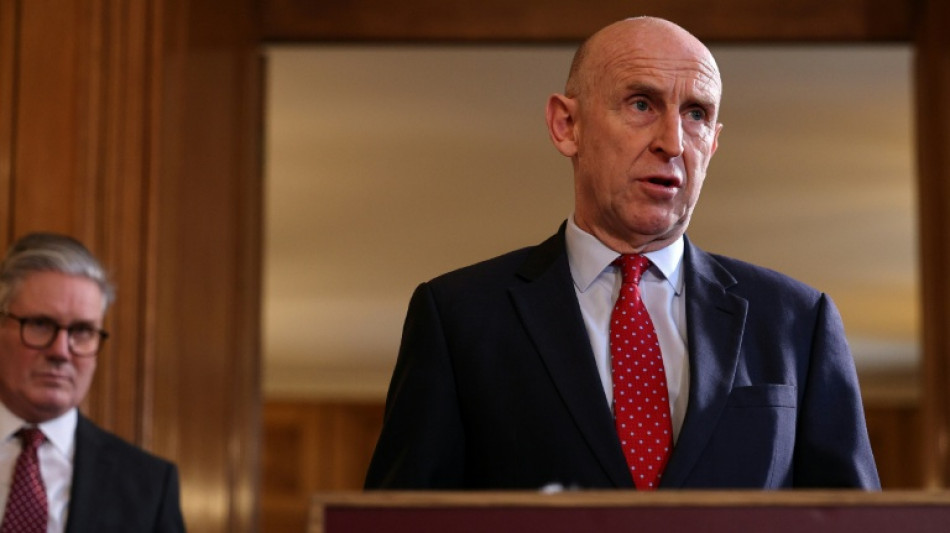
UK defence minister quits with stinging rebuke of PM Starmer / Photo: Adrian Dennis - POOL/AFP/File
British Defence Secretary John Healey sensationally quit on Thursday, accusing beleaguered Prime Minister Keir Starmer and the finance ministry of failing to commit enough money to protect the country.
His shock resignation deals a fresh blow to Starmer and comes at a precarious moment for the embattled Labour leader, a week before a by-election which could prompt a bid to replace him.
In stinging criticism, Healey warned that Starmer's long-awaited Defence Investment Plan (DIP) for funding over the next decade -- which the premier has yet to publish -- risked making Britain "less safe".
"You have been unable, and the Treasury has been unwilling, to commit the resources that the nation needs to defend the country at this time of rising threats," Healey wrote in a resignation letter to Starmer posted on his X account.
"After explaining to you that I would not be able to accept a DIP settlement that does not give our Forces the resources they need, I am now left with no other option than to submit my resignation."
Healey's sudden departure comes after months of delays to the defence plan, which Starmer has insisted he will publish before a NATO summit in Turkey beginning on July 7.
Starmer's centre-left government, elected in July 2024 following 14 years of Conservative rule, has pledged to ramp up defence spending, with priority given to NATO commitments.
The rise comes amid threats from Russia and as US President Donald Trump repeatedly urges NATO allies to spend more and become less reliant on Washington for security.
- 'Grave moment' -
Starmer has vowed to raise defence spending to 2.5 percent of gross domestic product from next year, increasing to three percent if Labour wins the next general election, expected in 2029, before reaching 3.5 percent in 2035.
British media has for weeks been reporting on behind-the-scenes battles within the government over the DIP settlement.
In his resignation letter, Healey said he was first given full sight of DIP on Monday and it sees defence spending rise to only 2.68 percent of GDP in 2030.
It "falls well short of what is required for defence and the country at this dangerous time", he wrote.
"Without a DIP that meets the moment in this way, I am being forced to make decisions that would reduce the readiness of our forces and increase the risk to personnel on operations, and could make the country less safe."
Tan Dhesi, chair of parliament's defence committee, said the government must take Healey's warning "with the utmost seriousness".
"That a defence secretary of his integrity and commitment has felt compelled to resign in response to the inadequacy of the proposed defence settlement is a grave moment," the Labour MP said in a statement.
Starmer is facing political peril in next Thursday's contest when Greater Manchester mayor Andy Burnham stands for the Makerfield parliamentary seat and has said that he would participate in any Labour leadership race, although none has yet been triggered.
Wes Streeting quit as health secretary last month following disastrous local and regional election results for Labour and has also said he would run in any future contest.
Healey, 66, has been previously talked about as another potential contender, but there was no immediate suggestion that his resignation is linked to the leadership speculation.
The defence investment plan was originally expected to be published back in late 2025 but its release has repeatedly been pushed back -- to the frustration of industry and others.
It was expected to be announced next week, according to reports earlier Thursday.
Healey's resignation "creates a sequence of political headaches in terms of a replacement, and trying to get the defence investment plan published," Ed Arnold, senior associate fellow at the RUSI think-tank, told AFP.
A government source insisted that Starmer had made Britain "safer", adding that the defence spending proposals "will deliver the capability our armed forces need".
Z.Baker--CT