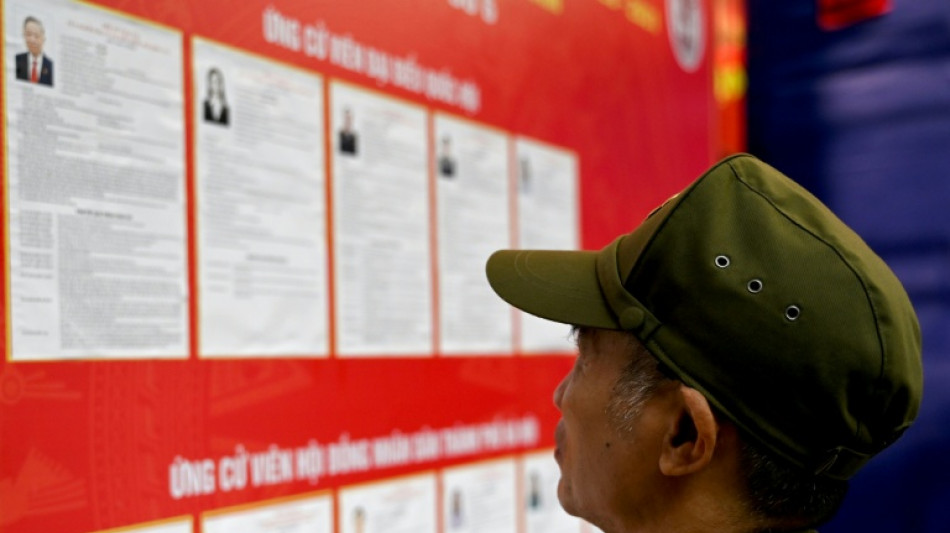
One-party Vietnam holds parliamentary election / Photo: Nhac NGUYEN - AFP
Vietnam goes to the polls on Sunday to elect members of the National Assembly, the country's top legislative body that serves mainly to ratify decisions by the ruling Communist Party.
The Southeast Asian nation of 100 million is both an economic success story, boasting eight percent growth last year, and a repressive one-party state that often jails its critics.
Out of 864 candidates for the 500-seat parliament, only 65 are not members of the Communist Party -- down from 74 in the last vote five years ago.
In the capital Hanoi, patriotic red-and-yellow banners flutter from lampposts and traffic lights, extolling the "national festival" where people "eagerly cast ballots".
But in a country where major policies and projects are decided by senior cadres, many citizens feel lukewarm about elections.
"I don't vote because I think my vote doesn't matter," said Phuong Anh, 25, who works an administrative job in Da Nang.
Many people she knows feel similarly, she said, adding that "people feel they have to accept whoever ends up in those positions because that's how the system functions".
Quynh Anh, a 24-year-old office worker in Ho Chi Minh City, said she might vote this year "because I have never done it before".
"I wouldn't say I'm very excited, but it's a new experience that I haven't had, so I'm curious to try it and see what it's like."
- No surprises -
Among the new parliament's first tasks when it sits next month will be to confirm top leaders already selected by the party at its twice-a-decade congress in January.
Top leader To Lam was reaffirmed as general secretary, but he is widely expected to become president as well -- a post that requires approval by lawmakers.
"As more or less a window-dressing institution, there won't be any big surprises at the vote," said Nguyen Khac Giang of the ISEAS–Yusof Ishak Institute in Singapore.
"However, top personnel selections -- particularly the prime minister and the president -- will carry significant implications for the ongoing reform process," he added.
Lam has implemented dramatic changes in nearly two years at the helm, slashing bureaucratic red tape and pushing major infrastructure investments as he aims to boost economic growth.
The party rallied around his bold vision at the January congress, electing several of Lam's allies to its highest decision-making body.
Aside from his reappointment as general secretary, however, the party did not publicly announce the other main "pillars" of Vietnam's collective leadership structure.
The president, prime minister and head of the national assembly will all be confirmed by lawmakers' votes.
Lam would be the first person to have secured the top two jobs at a party congress, rather than stepping in following a holder's death.
G.Sanders--CT