North Sea nations vow to boost wind power for energy independence / Photo: Thomas Traasdahl - Ritzau Scanpix/AFP/File
A group of northern European nations vowed Monday to build up climate-friendly wind power in the North Sea to achieve greater energy independence from Russia and other foreign suppliers.
German Chancellor Friedrich Merz was hosting a summit in the port-city of Hamburg as Europe faces a hostile Russia but also worries about the future strength of transatlantic ties and US designs on Greenland.
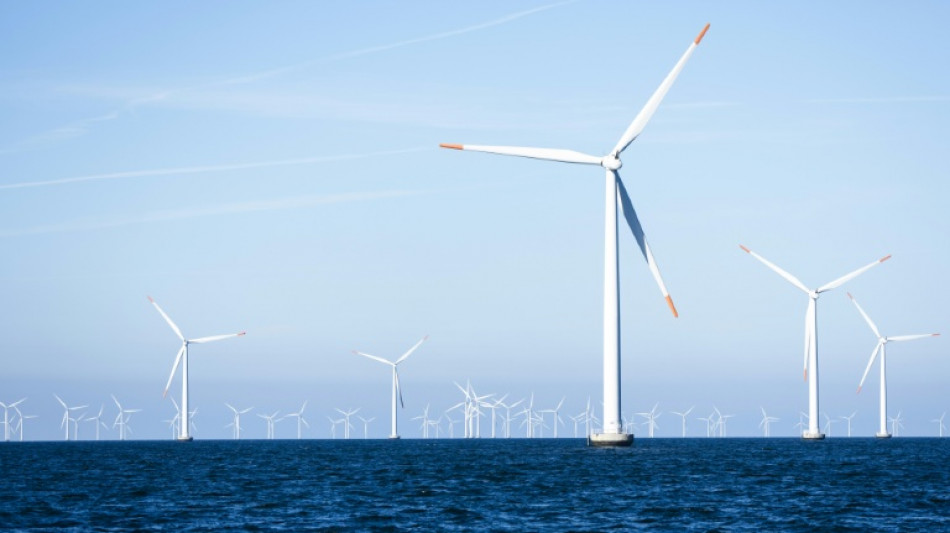
Aiming to make Europe more resilient in an uncertain world, the group of countries pledged to boost off-shore wind power in the North Sea and turn it into the "world's largest clean energy reservoir".
They agreed to build up an additional 100 gigawatts of wind turbines -- enough to power about 100 million homes -- through an "unprecedented fleet of joint offshore wind projects".
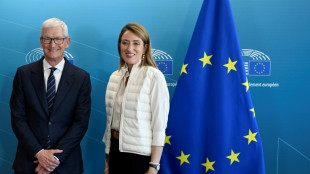
The agreement is a "very clear signal to Russia", said EU Energy Commissioner Dan Jorgensen after it was signed by Britain, Belgium, Denmark, France, Germany, Iceland, Ireland, Luxembourg, the Netherlands and Norway.
"No more will we let you blackmail member states of the European Union and no more will we help indirectly fund the war in Ukraine," he told a press conference.
Germany and other EU members have been scrambling to wean themselves off Russian energy imports since Moscow launched its full-scale invasion of Ukraine in February 2022.
They have also been on heightened alert against suspected Russian sabotage and surveillance operations which they blame for severed seafloor cables and mysterious drone flights over airports and critical infrastructure.
- 'Wind is for winners' -
The European wind power push comes days after US President Donald Trump -- a strong promoter of oil drilling who denies man-made climate change is real -- last week branded wind farms "losers".
British Energy Secretary Ed Miliband pushed back and said that "offshore wind is for winners" and "absolutely critical for our energy security".
Wind farms provide "homegrown, clean energy that we control", Miliband said, adding that the renewable energy source is not under "the control of the dictators and the petro-states".
Proponents of wind energy argue it is not only good for the climate but also for security, as such decentralised systems are more resilient to sabotage and attack than traditional power plants, pipelines or oil tankers.
Simon Skillings of think tank E3G said much had been learnt from "hybrid attacks that have happened on infrastructure, but also looking at the Ukraine-Russia situation. We've learnt that dispersed assets are more resilient.
"A more dispersed infrastructure is more robust... You need basically multiple attacks rather than single attacks to knock out an energy supply."
- Greenland tensions -
The talks come as the issue of Greenland and broader Arctic security loom large.
Trump last week backed away from his threat to seize Greenland by force, and to level punitive tariffs against European NATO allies who stand in his way.
Among the leaders in Hamburg are Danish Prime Minister Mette Frederiksen, who visited Greenland on Friday, and representatives of NATO and the European Commission as well as Iceland.
Jorgensen -- himself from Denmark -- said that "the question of Greenland is one that is on the mind of everybody".
"All of the ministers that I've met today has been extremely supportive and loyal, and I think it's fair to say that everybody in Denmark is extremely happy that our friends have stood by our side," he said.
Jorgensen also addressed the issue of whether the EU wants to reduce its dependence on US gas imports in the wake of Trump's recent threats to annex Greenland.
"We want to trade and deal with the US on as many issues as possible," he said, but he added that "we are not aiming at replacing one dependency with a new dependency".
"We want to grow our own energy, and our strategy in the future is to become free of gas."
burs/fz/sr/jh
H.Price--CT