EU pushes for more nations to pay to protect nature / Photo: STRINGER - AFP
The European Union vowed Tuesday to maintain its push for more countries to fund global conservation, as a dispute over who should pay divides nations at key UN nature talks.
Around two dozen mostly Western nations are formally expected to provide biodiversity finance but the EU wants the list of donors expanded to include wealthy emerging economies like the Gulf states and China.
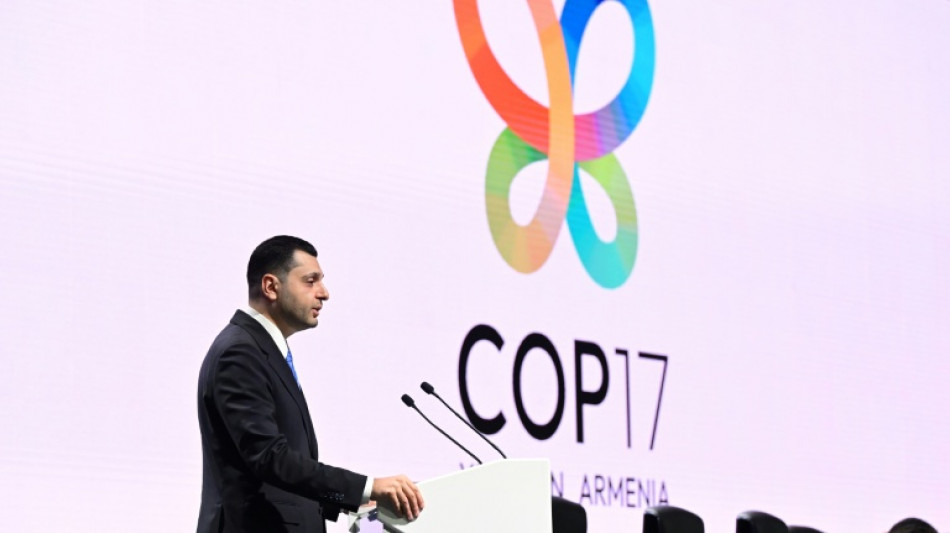
The push has met resistance at the COP17 biodiversity summit in Armenia, with disagreement over the donor list among the main issues unresolved in the final week of negotiations.
Nearly 200 nations are in Yerevan to take stock of limited progress towards a series of 2030 nature goals, including a pledge to protect swathes of the planet and its threatened species.
"Obviously if we want to finance nature restoration, saving species -- adequately -- we need to broaden that donor base," Ireland's Minister of State for Nature, Christopher O'Sullivan, told reporters.
"It's a position we will be holding," said O'Sullivan, whose country holds the rotating presidency of the EU Council.
The 27 EU member states felt "very strongly" about the issue, he added.
Negotiators have until Friday to resolve the donor dispute and other sticking points before the biodiversity summit closes.
Around 70 government ministers were in Yerevan to try to unblock some of the sticking points, according to the COP17 presidency.
- 'Crucial' -
The UN biodiversity treaty was adopted in 1992, establishing an obligation for developed countries to help fund conservation efforts in developing nations.
The list of donor countries includes mostly European nations but also other developed industrialised countries such as Japan, Australia and Canada.
The United States is not a party to the convention and is therefore not on the list.
The EU argues that times have changed since the early 1990s and the global economic landscape shifted.
It was "crucial to find ways to enlarge the contributor base for this convention, in a way that is in line with evolving economic realities", EU environment commissioner Jessika Roswall told delegates in Yerevan, without naming any countries.
This was particularly urgent as the annual shortfall in funding needed for nature is estimated at around $700 billion.
A lack of money is a major barrier to meeting the 2030 biodiversity goals and a key focus of the Yerevan summit, where governments are seeking ways to raise funding from public and private sources.
The EU has also pushed in international climate negotiations for China and other big emerging economies to join in contributing finance to help poorer countries tackle global warming.
AFP has sought comment from a representative of China's Ministry of Ecology and Environment at the talks in Yerevan.
Z.Peterson--CT