Dubai South Metro Link to Al Maktoum Airport Approved for 2031
The Dubai government has approved a Dh2 billion metro extension connecting Dubai South to Al Maktoum International Airport City, with services scheduled to begin in 2031. The three-kilometer route will add two stations along Route 2020, enhancing public transport access for residents and supporting the area’s emergence as a major residential and commercial hub.
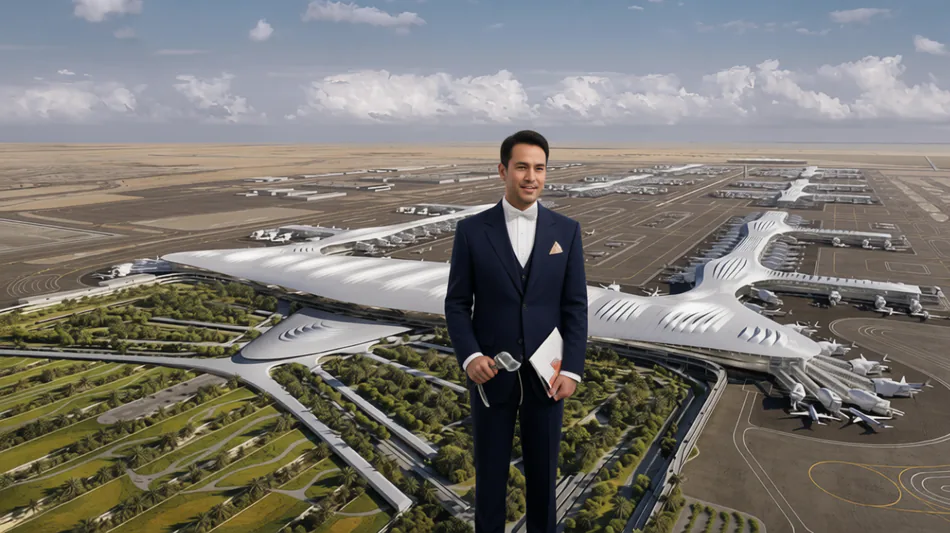
Dubai has approved a Dh2 billion metro extension that will connect the Dubai South district to Al Maktoum International Airport City, a development aimed at enhancing public transport infrastructure for one of the emirate’s fastest-growing residential and commercial hubs. The project includes a three-kilometer route with two new stations along Route 2020, linking the area directly to the airport’s West Terminal. According to the Dubai Government Media Office, passenger services are scheduled to commence in 2031.
The approval adds a significant public transport option to an area that has already seen increased activity from property buyers, businesses, and developers. Joseph Salem, Partner and Middle East Lead for the Travel, Transportation and Hospitality practice at Arthur D. Little, stated that the connection is expected to support the growing workforce living and working around the aviation hub while improving access to the wider city.
"Dubai South is set to become home to over a million people living and working around the airport, and a direct metro link will connect that workforce and community to the rest of the city reliably and affordably," Salem said.
Al Maktoum International Airport, commonly referred to as DWC, is situated within the broader Dubai South development. It operates separately from Dubai International Airport (DXB), with both facilities managed by Dubai Airports. The new metro extension will integrate with the existing airport express line and Etihad Rail’s high-speed rail network. Government officials indicated that the project aims to facilitate travel for passengers, airport staff, and visitors, while also improving traffic flow on surrounding roads and easing access to urban centers across Dubai.
The transport announcement comes at a time when Dubai South is experiencing robust property activity. A July report from W Capital Real Estate Brokerage revealed that the district recorded 2,869 transactions worth Dh3.3 billion in June alone. This represented an 111% increase in transaction volumes and a 106% rise in values compared to May. The brokerage attributed much of this surge to off-plan sales, noting that buyer interest was already strong before the metro approval.
"Dubai South is increasingly becoming one of Dubai’s primary real estate growth engines. Major infrastructure projects, led by Al Maktoum International Airport, are reshaping investor priorities and attracting both developers and institutional capital to the area," said Walid Al Zarooni, Chairman of W Capital Real Estate Brokerage.
The brokerage’s report also highlighted that Dubai South attracted 653 new companies over the preceding year, bringing the total number of operating businesses in the district to more than 4,200. This expanding business base is viewed as a key driver of long-term residential and commercial demand in the area.
Vivek Bhavsar, Director of Consulting at JLL MENA, previously noted that communities receiving their first metro connection tend to be the primary beneficiaries of Dubai’s rail expansion. "Areas gaining metro access for the first time will feel it most," he said.
The metro extension also coincides with shifting trends in mortgage usage across Dubai. Data from Property Finder, based on Dubai Land Department records, showed that 34.7% of apartment sales involved a mortgage in October, up from 31% in September and 26.7% in August. However, the average apartment mortgage decreased to Dh1.77 million from Dh2.67 million the previous month.
Total mortgage registrations rose by 5.2% to 3,811, marking the third consecutive monthly increase, while the total mortgage value declined by 24.7% to Dh7.32 billion. Cherif Sleiman, Chief Revenue Officer at Property Finder, emphasized that the rising number of mortgages indicated a broadening market rather than weakness.
"Some will look at October’s 24.7% fall in mortgage value and see a weaker market. The more important number is that mortgages rose for a third month in a row. More people are buying, with smaller loans, so the market is getting broader," Sleiman said.
While these figures reflect the broader Dubai market, they provide context for housing decisions influenced by affordability and borrowing costs. Tenants also remain a significant component of demand; rental enquiries accounted for 73% of leads on Property Finder in October, with asking rents rising for a second consecutive month after hitting their lowest level of the year in August.
Beyond transport, families considering Dubai South are also evaluating access to schools, healthcare, and community facilities. At the same meeting where the metro extension was approved, the Executive Council endorsed a Dh9.59 billion plan for community services and facilities through 2040. The plan covers existing and planned residential communities across the emirate, prioritizing areas for UAE citizens. It includes provisions for education, healthcare, safety, security, sports facilities, and amenities for senior citizens and families.
The announcement did not specify exact facility allocations or spending for Dubai South, stating instead that services would be distributed efficiently as residential communities develop. A Dubai Land Department study approved at the meeting projected the development of 365,000 residential units by 2030, with overall residential occupancy across Dubai reaching 97%.
For developers and businesses operating around DWC, the scheduled transport link offers greater certainty for investment planning. Salem identified hospitality and logistics operators, alongside property developers, as potential beneficiaries. "For investors, early transport certainty is one of the strongest signals a city can send. Knowing the metro will be in place before the airport opens gives developers, airlines, logistics players and hospitality operators the confidence to commit to the airport city," he said.
Previous assessments of Dubai’s Gold Line highlighted station proximity, building quality, purchase price, and handover timing as key factors influencing property performance. However, these assessments do not establish specific price or rental forecasts for the DWC extension. For residents considering Dubai South, the practical value of the new commitment will become clearer once station locations, access arrangements, and journey times are finalized.
N.Morris--CT