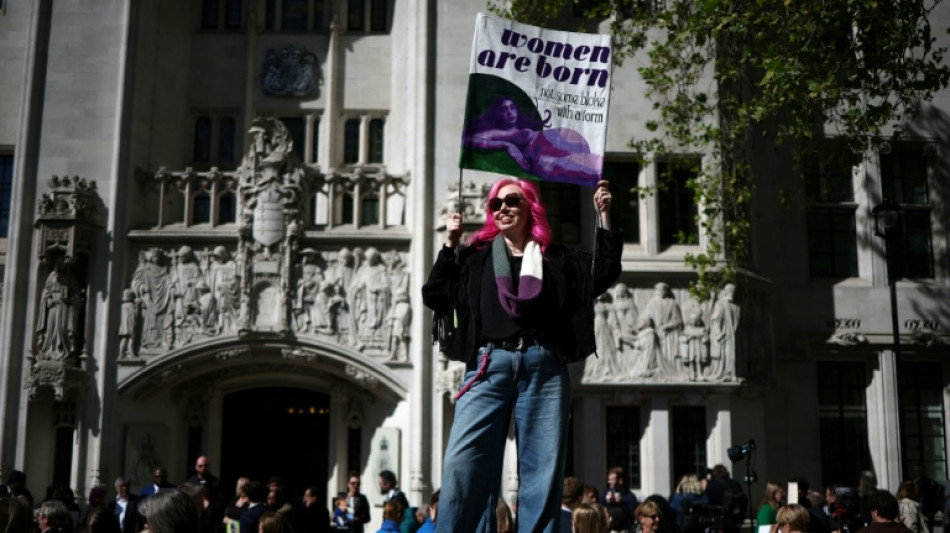
UK details rules for single-sex spaces after landmark ruling / Photo: HENRY NICHOLLS - AFP
Britain's Labour government insisted that long-awaited new guidance on single-sex spaces published on Thursday still protects transgender people.
The guidance responds to a landmark decision by the Supreme Court in April last year, which ruled that a woman is legally defined based on her sex at birth.
The ruling was hailed by gender-critical campaigners, but transgender people have expressed concern that they will be discriminated against.
The newly published code confirms that a service must be used on the basis of biological sex for it to be classed as single sex under Britain's Equality Act of 2010.
It means that trans women should not be allowed to use women's toilets or be admitted to women-only sports clubs. The same applies to trans men regarding male toilets and men-only organisations.
But the advice also states that it would be "very unlikely to be proportionate" to stop trans people from using toilets if there was no facility available to them.
The guidance says too that it "may be legitimate" to ask someone to provide confirmation that they are of the "eligible sex", but advises this "should be done as sensitively as possible, and must respect their privacy".
Women and equalities minister Bridget Phillipson said that under the court ruling "trans people are still protected" by the Equality Act.
"This code is an important step in ensuring that organisations across Great Britain have clear guidance regarding its implementation, protecting people's rights across our country," she said in a written statement to parliament.
But Alexandra Parmar-Yee, director of the Trans+ Solidarity Alliance, said the government "risks pushing trans people yet further out of public life".
Following the court ruling, the England and Scotland's football associations barred transgender women from women's football.
The UK's Women's Institute and Girlguiding youth organisation has also banned trans women from becoming members.
According to the latest census, 0.5 percent of the population in England and Wales aged over 16 identify with a gender different from the sex they were assigned at birth.
G.Sanders--CT