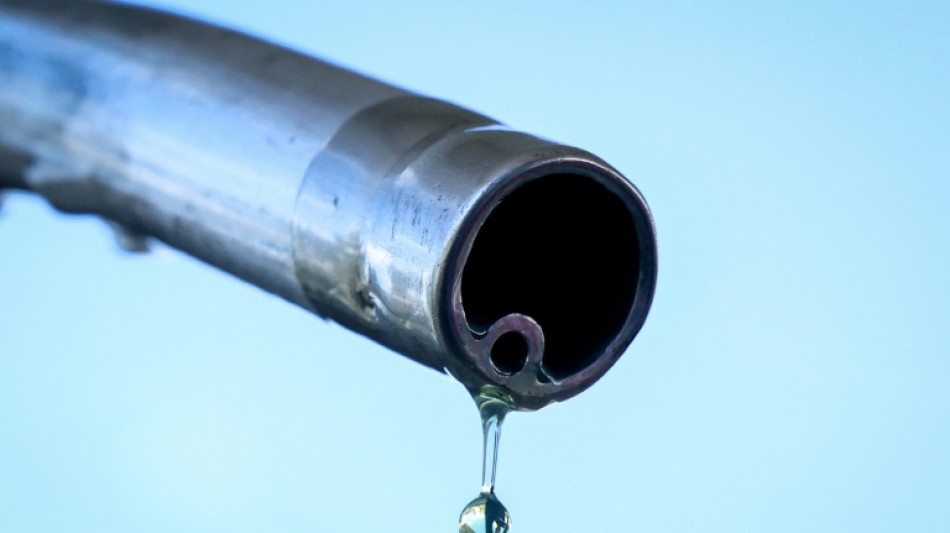
Oil crisis: Is world better placed than in 1973? / Photo: Alain JOCARD - AFP/File
Ten days after the first American and Israeli strikes against Iran, oil prices have cooled slightly after soaring above $100 a barrel.
Even if they risk rocketing once more because of ongoing military action, the situation remains very different compared with the oil shock of 1973. AFP looks at why:
- Blockade versus embargo -
The current crisis' mechanics differ radically from those of 1973. Back then, the shock was political -- a deliberate embargo by OPEC's Arab member countries against pro-Israeli Western nations during the Yom Kippur War.
In 2026, the shock is logistical -- a military blockade of the Strait of Hormuz by Iran, a key transit point through which 20 percent of global production usually passes.
In the current situation, the resource is not being refused by producers, rather it is physically blocked.
Saudi Arabia, Iraq, the United Arab Emirates and Kuwait have the capacity to open the floodgates to stabilise the market but they are hampered by the fact that "they are all dependent on Hormuz", Francis Perrin, an energy expert at French think tank IRIS, told AFP.
This bottleneck is the result of a lack of sufficient alternative routes to export Middle Eastern crude.
These Gulf giants have already begun reducing their production owing to a lack of local storage capacity, noted Jorge Leon, an analyst at Rystad Energy.
"The current crisis could potentially become a major energy crisis if this is sustained over time," he told AFP.
It is this difference in nature -- a physical barrier rather than a deliberate diplomatic rupture -- that makes a price explosion similar to that of 1973, when prices quadrupled in three months, virtually impossible according to analysts.
- Pressure of US elections -
Iran's threat to block Middle East exports of oil to US and Israeli allies as long as the war continues aims to keep energy prices high, heaping pressure on the United States ahead of its midterm elections in November.
President Donald Trump will want to avoid at all costs a prolonged surge in oil prices, which would become his political Achilles' heel.
On Monday, Trump contained price increases by asserting that the war could end sooner than expected.
He said he would also waive some sanctions on Russia, having allowed India to temporarily import Russian oil.
- Strategic reserves -
Unlike the first oil shock, when Western countries were caught off guard, OECD members can now rely on massive strategic reserves, equivalent to three months of imports.
This safety net is managed by the International Energy Agency, an institution created in the aftermath of the 1973 crisis to address this type of emergency.
To compensate for the Iranian blockade, the IEA could soon inject some of these reserves into the market to curb price speculation and fill the supply gap.
It is an essential safety valve that remains "effective only if the conflict doesn't last too long", cautioned Perrin.
- Affect on green transition -
The balance of power has also radically changed. While OPEC took advantage of the chaos in 1973 to impose record prices, exporting countries today fear that fresh all-time peaks could form the strongest argument for a transition to green energy.
The challenge is all the more complex because the world remains hooked on oil.
"We are still struggling to replace the king that is oil," said Perrin, recalling its indispensable role in transportation and petrochemicals.
While crude oil's share of the global energy mix has decreased, overall consumption is reaching record highs.
"If the conflict drags on for a few more weeks, prices could easily climb to $140," predicted Leon, weakening the global economy.
G.Walker--CT