Maybe Art Space Revives Tempe’s Underground Art Scene in Historic Home
JJ Horner and Joey Dougherty have transformed a historic 1948 home at The Compound into Maybe Art Space, a new Tempe gallery that operates without the need for sponsors or sales. Opening its doors with a group show featuring local painters and sculptors, the space aims to revive the community-focused, low-pressure atmosphere of Horner’s legendary underground New Year’s Eve parties.
JJ Horner and Joey Dougherty have opened Maybe Art Space in Tempe, a gallery that deliberately eschews the commercial pressures typical of the art world. Located within The Compound at Farmer Avenue and University Drive, the new space occupies a former one-bedroom home with deep roots in the local creative community. It offers an environment where artists can exhibit work without the necessity of securing sponsors, grants, or relying on sales to sustain operations.
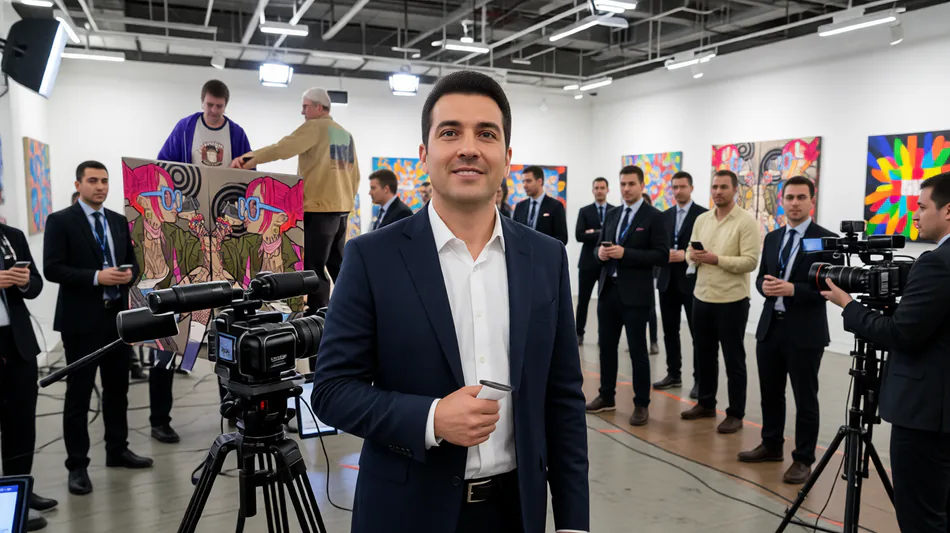
The gallery’s debut exhibition opened on Friday, featuring works by local painters Frank Gonzales and Stacks Malone, alongside surreal assemblage sculptures by Rodgell Helm. The installation process began two nights prior, with artists dropping off large canvases from their vehicles while Helm’s pieces were already scattered throughout the rooms. Horner, who co-founded the gallery last month with Dougherty, assisted in arranging the display, pausing to acknowledge Malone’s contribution.
"Stacks Malone, coming correct with the art," Horner said. "You did great. I’m so stoked. Thanks for bringing so much stuff, dude."
Malone responded with a sheepish shrug, accepting the praise as Horner continued to organize the space. The event was open to friends, family, neighbors, and anyone who heard about it, operating on an informal basis rather than through exclusive guest lists.
Maybe Art Space is situated in a building constructed in 1948, which has served various roles in Tempe’s cultural history. In the 1990s, it functioned as the first offices for Rhino Staging, a local concert production company. By the 2000s, the structure had become an art space, and Horner first exhibited his work there in 2005. The following year, he began organizing underground New Year’s Eve parties at The Compound, which became a staple of the Valley’s art and music scenes.
These events, known as the "Maybe" parties, were named with variations such as "Maybe 2013 Will Be Better." They offered an alternative to large-scale block parties, bringing together local artists, musicians, DJs, and attendees in a more intimate setting. Over the years, some gatherings featured works from more than 60 artists and dozens of performers playing into the early morning hours. Horner described the events as a way to "push art and culture in people’s faces while they were blacked out and didn’t expect it," aiming to calm the chaotic energy of New Year’s Eve.
The Maybe parties ended after COVID-19 cancellations in 2020 and 2021, followed by a noise complaint response from Tempe Police during a sound check in 2024. Horner cited the hassle and financial risk as reasons for stopping the events.
Horner and Dougherty met in 2019 after both had created art at Danelle Plaza, a Tempe shopping center that hosted local artist installations in vacant storefronts. Dougherty, a video artist known as Purdy Lights, moved into a house at The Compound, while Horner had lived on the property since 2006. They decided to transform one of the houses into a gallery that evoked the laid-back vibes and community feel of the Maybe parties without the associated difficulties.
The exterior of the building was painted white with blue trim and decorated with a large eyeball above the front porch, a motif familiar from Horner’s work, including the cover of Billy Strings’ 2017 album "Turmoil & Tinfoil." Dougherty referred to the building as "the JJ house," noting that Horner wanted the structure itself to be part of the artistic experience.
"It fits so well. It’s me," Horner said. "I want the art to be on the outside and the inside. It’s an all-encompassing experience."
The gallery provides a rare opportunity for independent exhibition in Tempe, where many grassroots spaces have closed or been displaced by redevelopment. Dougherty emphasized that the space operates on private property with a supportive landlord, allowing Horner to curate without outside influence.
"We’re just able to operate it," Dougherty said. "JJ’s able to curate it on his own terms without outside influence, without even really the need to sell anything in order to operate and keep this going."
Horner described the location as a long-term home, having first participated in a group show there in 2005 and moved into a neighboring house the following year. He has remained a fixture in Tempe’s art scene, co-founding Pyramid Country, an art and skateboarding project known for its videos and clothing.
The gallery will display art through April, alternating between large group shows and smaller exhibitions of five to seven artists. January’s show will feature works by individuals with ties to The Compound, including Horner, his mother Joyce, former resident Colton Brock, and local artist Andy Brown. February’s lineup includes Tanner Ballengee, also known as Penis Man, a street artist who tagged vacant buildings throughout Tempe until his arrest last year.
Horner selects artists based on personal connections and how their work fits together. For the November show, he chose Gonzales, Malone, Helm, surrealist painter Ashley Macias, and pop-art muralist Lady Egg because their vibrant colors and styles complemented each other.
"Everybody that I’ve chosen, they’re personal to me in some way," Horner said. "It felt like a good ensemble of artists."
Horner noted that his 18 years in Tempe’s art scene provide a network for finding artists, rather than relying on formal calls for submissions. He looks for creators who build their own worlds and maintain momentum in their work.
"I always look for artists that try to build out their worlds and keep the momentum going in their own work and make their own small worlds that will fit in our small world," he said.
V.Cox--CT