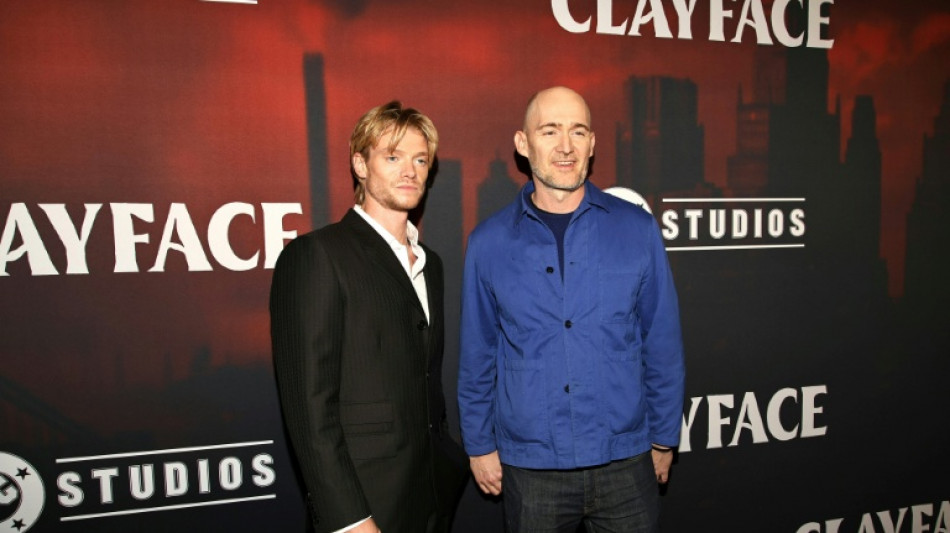
'Clayface' gets under the skin of the superhero genre / Photo: Jeremy Chan - GETTY IMAGES NORTH AMERICA/AFP
Superhero cinema has flirted with the grotesque before, but rarely with the level of blood-soaked commitment seen in "Clayface", DC Studios' new film from the Batman universe.
At a time when the superhero genre is struggling to excite audiences, DC's shape-shifting Batman supervillain aims for something uniquely visceral.
"I don't want just clockwork scares, jump scares, I don't want mechanical scares, I want scares that get under people's skin," British director James Watkins told AFP.
"Body horror is possibly one of the most relatable scares, because we all have fears for what can go wrong with our bodies."
Welsh actor Tom Rhys Harries, 36, who plays rising film star Matt Hagen whose face is horrifically disfigured by a mob boss and sets out to wreak revenge, sees the character as a natural fit for the genre.
"Clayface as a character is sort of like uniquely suited to the body horror genre," he said.
It was his first foray into horror, but he treated the challenge as any other form of acting, although he spent hours in the makeup chair ahead of some shoots.
"Where I could shoot something with a prosthetic, often we would do that," Watkins said, rather than using visual effects.
"If you need to augment it, you've got a very strong base. But also by shooting it for real, you've got real-time reactions from everybody."
Impatient to be free of the prosthetics, Harries admitted to ripping them off at the end of each shoot and getting scolded by the makeup team.
"Somewhere, there's a costume store which has like clumps of my face in (the) pockets," he joked.
The same commitment to texture shaped the setting of the film in northern Liverpool which morphs into Gotham City.
"When you're alongside the Mersey and the rain's coming in and it's heavy atmospherics, you just feel it," Watkins said.
"It creates a vibe, a mood, but you can't create that on a soundstage."
It's a philosophy he extends to the industry's anxieties about artificial intelligence.
"I still feel that conversations I have with people are with people, because the films come down to human emotion," he insisted.
P.Harris--CT